Anal Gland Abscess in Dogs: Signs, Causes, and Treatment
Understanding Anal Gland Abscess in Dogs: Signs, Causes, and Treatment
Anal Gland Abscess in Dogs: Signs, Causes, and Treatment
Anal gland problems are a common reason dogs are brought to the veterinarian. Some dogs simply develop mild irritation and begin scooting across the floor, while others progress to painful swelling and infection near the anus. When this infection worsens, an anal gland abscess can form.
Anal gland abscesses are painful, inflamed infections involving the small scent glands located on either side of the anus. These glands normally empty during bowel movements, but when they become blocked, fluid builds up inside. That trapped material can become infected, leading to swelling, pain, and sometimes rupture through the skin.
At Bushnell Animal Clinic, Dr. Roger Hart commonly evaluates dogs for scooting, licking under the tail, anal gland irritation, and abscesses. Because these infections can worsen quickly and become very uncomfortable, early treatment can make a big difference.
What Are Anal Glands in Dogs?
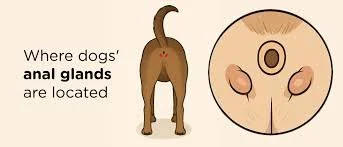
Dogs have two small anal glands, also called anal sacs, located just inside the anus at roughly the 4 o’clock and 8 o’clock positions. These glands produce a strong-smelling fluid that is normally released in small amounts during defecation.
In a healthy dog, this emptying happens naturally. But in some dogs, the glands do not empty properly. When that happens, the fluid inside becomes thickened and trapped, creating pressure and irritation.
This can lead to a progression of problems:
anal gland impaction
anal gland inflammation
infection
abscess formation
What Is an Anal Gland Abscess?
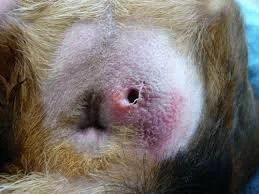
An anal gland abscess is a severe infection of the anal gland that causes the gland to become swollen, painful, and filled with infected material. If the pressure continues to build, the abscess may rupture through the skin beside the anus.
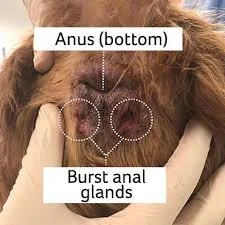
Once rupture occurs, owners may notice:
bloody drainage
pus
a foul odor
an open wound near the rectum
This can look alarming, and it is often very painful for the dog.
Signs of an Anal Gland Abscess in Dogs
Dogs with anal gland abscesses often show symptoms before the gland ruptures.
Common signs include:
scooting across the floor
licking or chewing under the tail
suddenly turning to bite at the rear end
swelling beside the anus
pain when sitting
straining to defecate
foul odor
redness near the anus
crying or acting uncomfortable
bloody or pus-like drainage if it ruptures
Some dogs become restless and cannot get comfortable. Others may seem painful only when sitting down or when their rear end is touched.
What Does an Anal Gland Abscess Look Like?
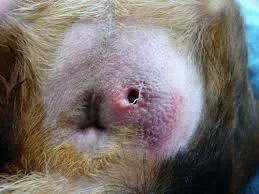
Before rupture, an anal gland abscess may appear as a swollen, red, tender area next to the anus. Owners may think it is a skin lump or bite wound at first.
After rupture, it may look like:
a draining hole beside the anus
a raw or open wound
bloody discharge
yellow or tan pus
wet fur with foul odor
Because the lesion is near the rectum, many owners are understandably alarmed when they first see it.
Why Do Anal Gland Abscesses Happen?
Anal gland abscesses usually develop when the gland does not empty normally and becomes impacted.
Common contributing factors include:
1. Anal Gland Impaction
When fluid becomes trapped and thickened inside the gland, it creates pressure and irritation. This is often the first step toward infection.
2. Infection
Bacteria can multiply inside the blocked gland, leading to pain, swelling, and abscess formation.
3. Chronic Soft Stool
Dogs with soft stool may not naturally empty the glands as effectively during bowel movements.
4. Allergies and Skin Inflammation
Dogs with chronic skin allergies often have recurrent anal gland problems as well.
5. Breed and Body Condition
Some small breeds and overweight dogs seem more prone to recurrent anal gland issues.
Is Scooting Always an Abscess?
No. Scooting is a common sign of anal gland irritation, but not every scooting dog has an abscess.
Scooting may occur with:
mild anal gland fullness
impaction
parasites
rear-end skin irritation
allergies
an actual abscess
Still, if scooting is frequent or your dog seems painful, it is worth having the area examined.
Internal link suggestion:
Why Is My Dog Scooting?
How an Abscess Progresses
Anal gland abscesses usually do not appear out of nowhere. They often develop over time.
A typical progression may be:
the gland does not empty properly
fluid thickens inside the gland
pressure builds
the gland becomes inflamed
bacteria multiply
the area swells and becomes painful
the abscess ruptures
Catching the problem earlier, before rupture, is easier on the dog and often simpler to treat.
How Painful Is an Anal Gland Abscess?
These abscesses are often quite painful. Dogs may:
avoid sitting fully
cry when touched
seem agitated
lick constantly
strain or posture repeatedly
become defensive around the rear end
If the abscess ruptures, the pressure may decrease somewhat, but the area is still infected and painful.
How Dr. Hart Diagnoses Anal Gland Abscesses
At Bushnell Animal Clinic, Dr. Roger Hart diagnoses anal gland abscesses through physical examination of the anal region and surrounding tissues.
Evaluation may include:
exam of the swelling or draining tract
assessment of both anal glands
checking for rupture or discharge
evaluation for skin irritation or allergy signs
discussion of stool quality and previous gland problems
In most cases, the diagnosis is straightforward once the area is examined.
Treatment for Anal Gland Abscess in Dogs
Treatment depends on whether the abscess is intact or has already ruptured.
Common treatment may include:
Draining the infected gland
If the gland is swollen and full, it often needs to be emptied and flushed.
Cleaning the area
A ruptured abscess site usually needs careful cleaning.
Antibiotics
These are often prescribed when infection is present.
Pain relief and anti-inflammatory medication
This helps reduce discomfort and swelling.
Warm compresses
In some cases, warm compresses may help support drainage and healing.
Treating the underlying cause
If allergies, chronic soft stool, or recurrent anal gland disease are involved, those issues should also be addressed.
Some severe or recurrent cases may need more advanced management, but many improve well with prompt treatment.
What Happens if It Ruptures?
If the abscess ruptures, the dog may suddenly seem both worse and better at the same time. Owners often notice a sudden draining wound, which looks alarming, but the release of pressure can temporarily reduce some discomfort.
Even after rupture, the dog still needs treatment because:
infection is present
the tissue is inflamed
the wound needs care
the other gland may also need evaluation
recurrence is possible if the underlying issue remains
A ruptured abscess is still a veterinary problem and should not be ignored.
Can Anal Gland Abscesses Heal on Their Own?
Some may rupture and partially drain on their own, but that does not mean the infection is resolved properly. Without treatment, pain, persistent drainage, recurring infection, and poor healing may occur.
Because of the location and the risk of ongoing contamination, veterinary treatment is the safest approach.
How Long Does Healing Take?
Healing time depends on:
whether the abscess ruptured
how severe the infection is
how quickly treatment begins
whether the dog keeps licking the area
whether there are recurrent underlying problems
Many dogs improve fairly quickly once the gland is drained and treated, but full healing may take longer if the area was badly inflamed.
Can Anal Gland Abscesses Come Back?
Yes. Some dogs develop repeated anal gland problems.
Recurrence is more likely in dogs with:
chronic gland impaction
allergies
soft stool
obesity
prior anal gland disease
If abscesses recur, long-term management of the contributing causes becomes important.
How to Help Prevent Anal Gland Problems
Not all cases are preventable, but some steps may help reduce recurrence.
Helpful measures include:
monitor scooting and early signs of irritation
address allergies and chronic itching
maintain healthy body weight
keep stools well formed when possible
schedule exams for repeated gland issues
Dogs with a history of anal gland trouble benefit from earlier attention the next time symptoms begin.
Anal Gland Abscesses in Florida Dogs
Dogs in Florida often deal with allergies, skin irritation, and chronic inflammatory issues that can contribute to anal gland trouble. Warm weather also means more licking, moisture, and skin irritation around the rear end for some dogs.
At Bushnell Animal Clinic, dogs with scooting, gland irritation, and painful rear-end swelling are common presentations, and these issues are worth addressing early before they progress to abscess formation.
When to See the Veterinarian
You should schedule an exam if your dog has:
frequent scooting
swelling beside the anus
licking under the tail
pain when sitting
bloody or pus-like drainage
strong odor from the rear end
repeated turning to bite at the area
a history of anal gland problems
Dr. Roger Hart and the team at Bushnell Animal Clinic help dogs with anal gland irritation, scooting, abscesses, and rear-end infections get proper diagnosis and relief.
Conclusion
Anal gland abscesses in dogs are painful infections that usually begin when a gland becomes blocked and infected. Dogs may scoot, lick the area, strain, or develop swelling near the anus before the abscess ruptures.
Because these infections can become severe and very uncomfortable, prompt treatment matters. At Bushnell Animal Clinic, Dr. Roger Hart provides compassionate care for dogs with anal gland abscesses, scooting, and chronic rear-end irritation so they can become comfortable again and heal properly.
FAQs
What is an anal gland abscess in dogs?
It is a painful infection of the anal gland that causes swelling, inflammation, and often rupture near the anus.
What are the signs of an anal gland abscess?
Common signs include scooting, licking under the tail, swelling beside the anus, pain when sitting, and drainage if the abscess ruptures.
Why does my dog keep scooting?
Scooting is often caused by anal gland irritation, though parasites, allergies, and skin irritation can also cause it.
Can an anal gland abscess burst?
Yes. Many abscesses rupture through the skin beside the anus, causing bloody or pus-like drainage.
Is an anal gland abscess painful for dogs?
Yes. These abscesses are often very painful and uncomfortable.
Can anal gland abscesses heal without treatment?
Some rupture and drain, but veterinary treatment is still important to clean the area, treat infection, and reduce recurrence.
What causes recurring anal gland abscesses?
Recurring abscesses may be linked to chronic impaction, allergies, soft stool, obesity, or ongoing gland disease.
When should I take my dog to the vet for anal gland problems?
You should schedule an exam if your dog is scooting often, has swelling or drainage near the anus, or seems painful when sitting.
Internal Links
Why Is My Dog Scooting?
Why Is My Dog Itching So Much?
Hot Spots in Dogs
Flea Allergy Dermatitis in Dogs
Why Is My Dog Licking Its Paws?
Dog Ear Infection: Signs, Causes, and Treatment
Why Is My Dog Shaking Its Head?
