Skin Cancer on Dogs: Visual Guide & What to Do Next
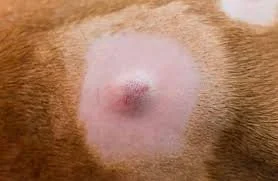
Skin Cancer on Dogs: What Lumps, Bumps, and Spots Can Look Like
If you’ve found a strange lump on your dog and started searching for photos of skin cancer on dogs, you’re not alone. Many dog owners turn to online images hoping to identify what that new bump or discolored patch might be. This guide is for dog owners who want to recognize potential signs of skin cancer early, as prompt detection and veterinary care can significantly improve your pet’s prognosis. Recognizing skin cancer matters because early detection improves outcomes and can make treatment simpler and more effective. While photos can help you understand what to look for, they cannot replace a veterinary exam. This guide walks you through what canine skin cancer often looks like, which types are most common, and when to seek professional evaluation at a clinic like Bushnell Animal Clinic in Bushnell, Florida.
Quick Answer: What Dog Skin Cancer Often Looks Like
Skin cancer in dogs refers to abnormal growths or tumors on the skin, which may appear as new or changing lumps, non-healing sores, or areas of skin discoloration. Skin cancer in dogs can take many forms, which is why pet owners often photograph concerning spots to compare with online examples. Understanding these visual patterns helps you recognize warning signs early.
Dog skin cancer can look like:
A raised, firm lump under or on the dog’s skin that wasn’t there before
A flat red or crusty patch that doesn’t heal
A dark mole-like spot with irregular borders
A non-healing sore that bleeds or scabs repeatedly
Here are examples of what different skin cancers may look like in real canine cases:
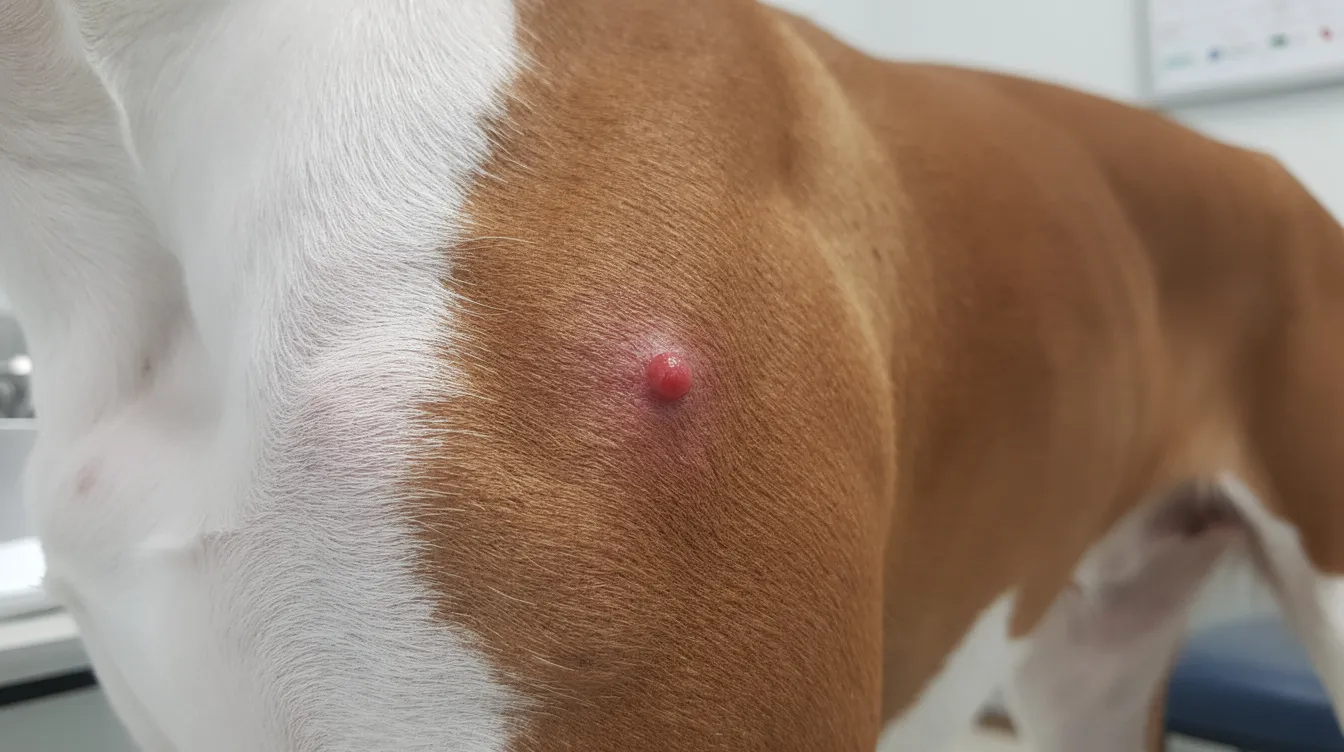
Pink, raised mass on a dog’s leg (suspected mast cell tumor): This often appears as a solitary, hairless elevation that can range from pea-sized to golf ball dimensions. These masses may swell or shrink, sometimes changing size after being touched.
Ulcerated sore on the nose or ear (suspected squamous cell carcinoma): Look for erythematous, scaly plaques or erosions with dark scabs that fail to heal within 10-14 days. These commonly appear on sun-exposed, lightly pigmented areas.
Black, irregular spot on the lip or gum (suspected melanoma): These present as darkly pigmented, raised nodules with uneven borders that may ulcerate and grow rapidly.
Red or black lump on the belly or inner thigh (possible hemangiosarcoma): Blood-filled vascular tumors that appear dark red to purple, often on sparsely haired ventral surfaces, prone to rupture and bruising.
Important: These photos serve only as educational visuals. Common signs of skin cancer in dogs include new or changing lumps, non-healing sores, and skin discoloration—but definitive diagnosis requires veterinary examination.
Bushnell Animal Clinic in Bushnell, Florida can examine any new lump or suspicious spot and perform testing the same day in many cases. If you’ve photographed something concerning on your dog, bring both the image and your pet in for evaluation.
What Does Skin Cancer Look Like on a Dog?
Skin tumors in dogs can vary widely in appearance, location, and severity, making it crucial for pet owners to monitor their dog’s skin for any unusual lumps or bumps during routine checks. Skin cancer is common in dogs, comprising up to 20-30% of all canine tumors, with middle-aged and senior pets at highest risk.
Typical visual signs dog owners might photograph include:
Firm or squishy lumps that weren’t there a month ago
Bumps that change size, color, or shape over a few weeks
Sores that don’t heal within 10-14 days
Black, brown, or gray “moles” that grow or become irregular
Red, crusty, or scabby plaques on ears, nose, or belly
Raised bumps that appear suddenly on the dog’s head, legs, or trunk
Ulcerated lumps that bleed or ooze
Many benign growths like lipomas and histiocytomas can look similar in photos, so owners should not self-diagnose from images alone. While 60-80% of detected skin masses turn out to be benign, evaluation by a veterinarian through fine needle aspiration or biopsy is necessary for any new or changing lump due to the “Great Imitator” nature of many skin cancers.
Light-colored dogs, short-haired breeds, and Florida sun exposure raise risk for sun-related skin cancers, making visual checks especially important for pet health in Central Florida.
Common Types of Dog Skin Cancer You Might See on the Skin
Some tumors in dogs are visible on or just under the skin and can often be felt during petting or grooming. Skin cancer can appear anywhere on a dog, but areas with low pigment or high sun exposure are of particular concern. Common locations for canine skin cancers include the mouth, toes, skin surfaces, and areas with sparse hair. The tumor's location is a key factor influencing treatment options, surgical procedures, and prognosis for dogs with skin cancer.
Here are the most common skin tumors that produce visible changes:
Mast cell tumors: Frequent in Boxers, Boston Terriers, Pugs, and Labrador Retrievers. May look like insect bites or warts, can swell and shrink unpredictably.
Melanoma: Dark, mole-like spots on lips, gums, or nail beds. Some are benign growths, but oral and nail malignant melanomas are often aggressive.
Squamous cell carcinoma: Flat, red, crusty, or ulcerated patches on sun-exposed areas like nose, ear tips, belly, or scrotum.
Cutaneous hemangiosarcoma: Dark red to black blood-filled lumps on hairless or lightly haired areas. May bruise or rupture, causing blood loss.
Soft tissue sarcomas: Firm, deep, slow-growing lumps on legs, trunk, or near the spine that can infiltrate surrounding tissue.
Basal Cell Tumors: Common in dogs, typically appearing as hairless, raised masses on the neck or shoulders, and are generally not malignant.
Benign look-alikes are also common, and photos alone cannot distinguish them from cancerous tumors. Bushnell Animal Clinic routinely evaluates these types of masses and can advise when surgery or further testing is needed.
Mast Cell Tumors: The “Chameleon” Skin Cancer
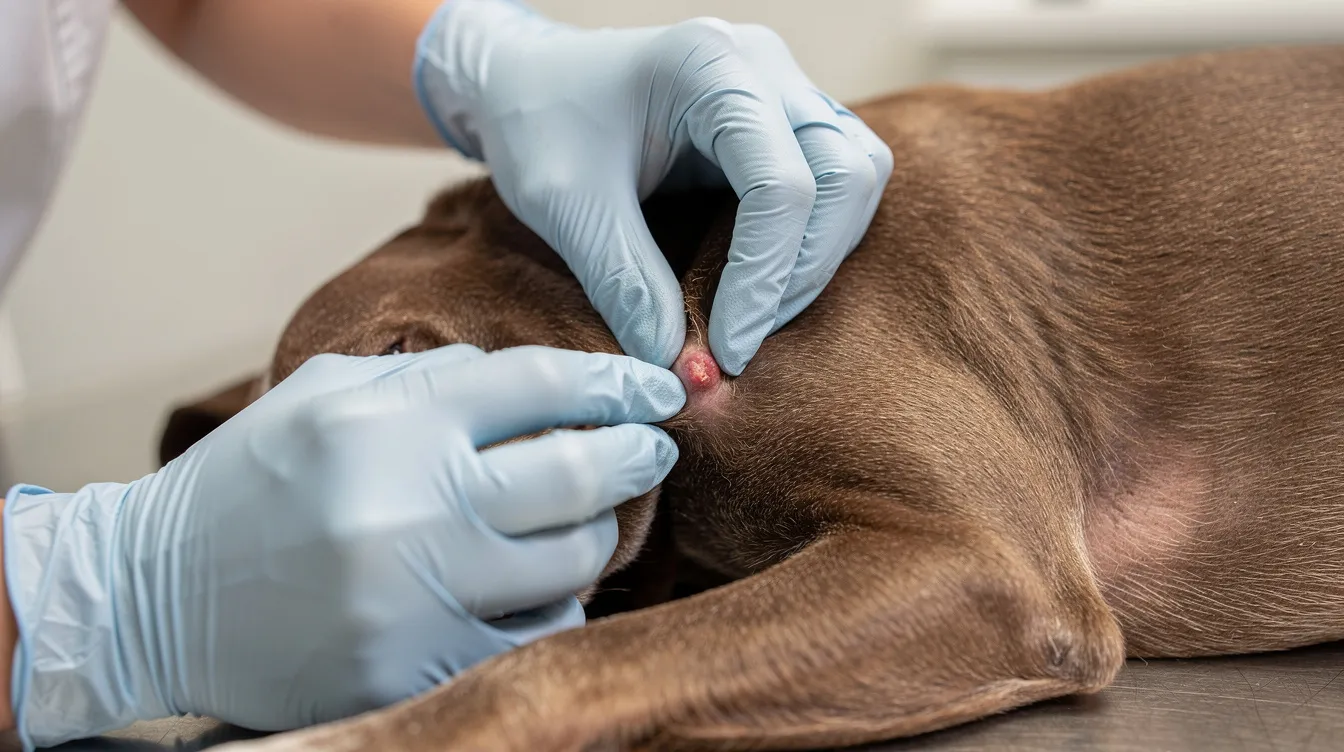
Mast cell tumors account for approximately 20% of all skin tumors in dogs and can appear as various types of lumps, some resembling harmless bumps while others may be angry or ulcerated. These cell tumors are called the “chameleon” because they mimic so many benign conditions.
Typical photo appearances include:
Single, raised lump that may be pink, red, or skin-colored
Can be firm or soft, sometimes hairless on top
May suddenly become swollen, red, or cause intense itching after being touched due to histamine release from cancer cells
Mast cell tumors are especially common in Boxers, Boston Terriers, Pugs, Pit Bulls, and Labrador Retrievers—breeds seen frequently at Bushnell Animal Clinic
Some mast cell tumors ulcerate and bleed, which can look alarming in close-up images
High-grade forms can metastasize to lymph nodes or internal organs in 50% of cases
Caution: Any fast-changing lump should be seen urgently, ideally within a few days. If a mass appears suddenly and changes rapidly, contact your vet immediately.
Melanoma: Dark Spots and “Moles” on Dogs
Not every dark spot is cancer, but changes in size, color, or shape need prompt veterinary evaluation. Many dogs have normal dark pigment on their skin that remains stable throughout life.
Malignant melanoma in dogs can appear as raised bumps that may or may not be dark-pigmented, often developing around the nail bed, lips, and mouth, and tend to grow quickly and spread to other organs. In photos, you might see:
Black or dark brown spots on the lips, gums, or tongue
Dark masses around or under a nail
Raised, pigmented nodules on skin that may ulcerate
Compare normal dark pigment (flat, unchanged freckles common in darkly pigmented breeds) with concerning signs (irregular borders, rapid growth, bleeding). Hair loss around a pigmented lesion can also signal trouble.
Malignant melanomas in the mouth and nail bed are especially aggressive, with survival rates under 10% at five years for untreated cases. These often require advanced treatment including surgery, radiation therapy, and sometimes immunotherapy. Immunotherapy is a newer approach to treating certain types of dog tumors, helping the body’s immune system recognize and attack cancerous cells, and is particularly promising for melanoma and some forms of lymphoma.
Bushnell Animal Clinic can perform initial diagnostics and coordinate with oncology centers if advanced therapy is needed.
Squamous Cell Carcinoma and Sun-Related Skin Cancers
Florida’s strong sun increases risk of squamous cell carcinoma in lightly pigmented dogs. Sun exposure drives DNA mutations that lead to these skin diseases over time.
Squamous cell carcinoma is the most common form of skin cancer in dogs, appearing as raised wart-like lumps that are firm to the touch, often found on the head, abdomen, lower legs, and rear. It typically affects older dogs. Common visual patterns include:
Red, crusty, or scabby plaques on ear tips, nose, eyelids, or belly
White or gray thickened patches with scaly skin that crack or bleed
Non-healing sores where the dog’s body is usually exposed to sunlight
Short-coated, light-colored dogs like Pit Bull-type dogs, Bull Terriers, Dalmatians, Beagles, and Staffies face 5-10 times higher risk. Any sore on a nose, paw pad, or along the nail bed that has not healed in two weeks should be checked immediately by a veterinarian.
Early surgical removal of small SCC lesions at Bushnell Animal Clinic often offers cure rates over 90%, far superior to outcomes when treatment depends on addressing advanced disease.
Benign Lumps That Can Look Scary in Photos
Many lumps that look alarming in a close-up photo are actually benign and manageable. Before assuming the worst, understand that your dog’s health isn’t necessarily in danger from every bump.
Common non-cancerous growths that pet owners often confuse with cancer include:
Lipomas: Soft, movable fatty tumors under the skin, common on chest, belly, and armpits. These affect 20-30% of older dogs and appear as anechoic masses on ultrasound.
Histiocytomas: Small, bright red, hairless raised bumps often on the dog’s head or front legs of younger dogs. Self-resolve in about 70% of cases within three months.
Sebaceous adenomas: “Cauliflower” or wart-like growths in older dogs, arising from hyperplastic oil glands.
Skin tags: Soft, floppy bits of extra skin, often on chest or armpits, posing only traction risks.
Photos alone cannot reliably separate benign from malignant tumors. Veterinarians recommend that any suspicious lumps or bumps on a dog’s skin be examined promptly, as early diagnosis can lead to more effective treatment options. Vets use fine needle aspiration or biopsy to vet determine the difference with 85-95% accuracy.
Bushnell Animal Clinic offers affordable lump checks and can often do an FNA in the same visit to reduce anxiety and provide an accurate diagnosis.
How Vets Diagnose Skin Cancer in Dogs While photos and home monitoring help with early detection, only veterinary diagnostics can confirm cancer. Visual cues alone predict malignancy in only a minority of cases, which is why veterinary medicine relies on laboratory analysis.
Key diagnostic steps include:
Physical exam: Maps all skin lesions, palpates lymph nodes, and assesses the dog’s overall condition for other symptoms
Fine needle aspiration (FNA): Collects cells through a small needle for cytology, identifying 85% of mast cells via their characteristic granules
Biopsy (punch or excisional): Used when FNA is inconclusive or tumor type demands more information about the underlying condition
Lab analysis: A veterinary pathologist identifies tumor type, grade, and whether cancerous cells have invaded margins
Imaging (X-rays, ultrasound): Screens for spread to chest or abdomen when metastasis is suspected in multiple locations. Determining the extent of cancer within the dog's body is crucial for staging and informing treatment decisions.
Bushnell Animal Clinic in Bushnell, FL provides in-house basic diagnostics and partners with referral labs for advanced pathology, with results typically returning in 5-7 business days.
Early testing of a small lump is cheaper, less invasive, and generally offers a better prognosis than waiting. A basic lump check costs $100-300 initially, far less than the $2000+ surgeries required for advanced cases.
When a Photo Is Helpful for Your Vet
Clear smartphone photos can help track changes over time and are useful to bring to your appointment at Bushnell Animal Clinic.
Quick tips for taking informative photos:
Capture the whole dog’s body plus close-ups of the lesion
Use a ruler or coin for scale next to the lump
Photograph from the same angle every 1-2 weeks
Note if the mass appears suddenly different between photos
Photos are especially helpful for skin lesions that change appearance, bleed intermittently, or are located in the mouth or between toes where direct visualization is difficult.
Remember: photos supplement, not replace, an in-person exam. Bring your documentation along with your pet for the most thorough evaluation.
Treatment Options for Dog Skin Cancer
Many dogs with skin cancer live for years with appropriate treatment, especially when malignant tumors are caught early. Early detection of skin tumors in dogs significantly improves treatment outcomes and prognosis, making regular monitoring essential for dog owners.
Main treatment categories include:
Surgery: The most common and effective treatment for many types of dog tumors. Surgery is often curative for small, localized tumors and may involve removing the tumor along with some surrounding tissue to ensure complete elimination of abnormal cells. Masses are often surgically removed with 2-3cm margins.
Radiation therapy: Used for tumors that cannot be fully removed or are in difficult locations like the nose or mouth. The tumor's location is a key factor in determining the use of radiation therapy, as it is particularly valuable for tumors in challenging or sensitive areas where surgery may not be feasible. Radiation therapy works by damaging the DNA of cancer cells.
Chemotherapy: Typically recommended for certain types of malignant dog tumors or when cancer has spread to multiple locations. Chemotherapy uses specialized oral drugs or injectable agents to kill rapidly dividing cancer cells. Protocols using vinblastine or lomustine can control systemic spread, with median survival of 4-6 months for aggressive cancers like hemangiosarcoma.
Immunotherapy: Used in select cases, particularly melanoma vaccines that can extend survival by 1-2 years for oral melanoma.
Palliative care: Focuses on comfort when cure is not possible, including pain management and quality-of-life support.
Treatment depends on tumor type, size, location, stage, and the dog’s age and overall health. Bushnell Animal Clinic can perform most common skin tumors surgeries on site and coordinate referrals for advanced oncology services when needed.
What to Expect After Skin Tumor Surgery
Understanding post-surgical recovery helps nervous pet owners feel prepared. Most dogs handle skin tumor removal well.
What you might see:
Shaved area with stitches or staples
Some bruising or mild swelling around the incision
Need for an Elizabethan collar to prevent licking and reduce inflammation at the site
Most dogs go home the same day with pain medication, medicated baths instructions if needed, and specific wound-care guidance. Avoid letting your dog engage in activities that could cause dehiscence.
Pathology results typically return in about 5-7 business days from the lab, providing definitive diagnosis and margin assessment. If margins are clean, the underlying cause of the mass has been addressed. If not, additional treatment may be recommended.
Bushnell Animal Clinic staff walk owners through biopsy results and next steps in plain language, ensuring you understand your dog’s health status completely.
Monitoring Your Dog’s Skin at Home
Monthly at-home skin checks are essential for pet health, particularly for older dogs and those living in sunny climates like Central Florida where UV exposure increases skin disorder risks.
Simple monthly skin check routine:
Run hands over the entire dog’s body during grooming or petting, feeling for any lumps or skin problems
Part the fur on the belly, groin, and under the tail to look for red or dark spots
Check ears, nose, lips, and between toes for sores, hot spots, or discoloration that could indicate acute moist dermatitis or other skin diseases
Look for signs of external parasites, fungal infection, yeast infection, or bacterial infection that could mimic or mask skin condition changes
Examine female dogs and unspayed female dogs for changes around mammary glands, as mammary tumors are a concern
Male dogs should have scrotal and perianal areas checked
Note any demodectic mange or other skin conditions requiring veterinary care
Record the location and approximate size of any lump you find
Monitor for a high quality diet to support immune system health
Twice-yearly wellness exams at Bushnell Animal Clinic allow the vet to compare findings over time and catch subtle changes. Regular wellness examinations at a veterinary clinic can help track a dog’s health over time and identify any unusual lumps or bumps that may develop.
Dogs recovering from previous cancer in dogs should be checked more frequently and seen promptly for any new growth.
When to Call a Vet Immediately
Contact Bushnell Animal Clinic right away if you notice these warning signs:
A lump that doubles in size within a month or is larger than a grape
Any sore that doesn’t heal within 10-14 days
A mass that bleeds easily or oozes pus or blood
A dark spot that suddenly becomes raised, irregular, or starts bleeding
Swelling of the face, legs, or belly with visible skin lesions
Signs of pain, lethargy, loss of appetite, or weight loss along with skin changes
Any mass that affects dogs’ comfort or mobility
Same-week or same-day appointments are ideal for these concerns. Early veterinary care dramatically improves prognosis and comfort for your pet.
Why Local, Ongoing Care Matters: Bushnell Animal Clinic’s Role
Bushnell Animal Clinic is a family-owned, community-focused veterinary practice in Bushnell, FL, serving Sumter County and nearby Central Florida areas including Pasco, Hernando, Lake, Citrus, and Marion counties.
The clinic offers:
Skin and lump evaluations for all breeds and ages
Fine needle aspirates and biopsies performed in-house
Soft tissue surgery for tumor removal with effective treatment protocols
Dental care and wellness exams that double as full-body skin checks
Guidance on sun protection and preventive care for at-risk dogs
The clinic emphasizes clear communication, affordable options, and long-term monitoring of pets with previous or current tumors. This approach helps catch recurrence early and provides continuity of care that distant specialist centers cannot match.
If you’ve taken a concerning photo of your dog’s skin and aren’t sure what it means, contact Bushnell Animal Clinic. Bring the image and your dog for an in-person evaluation—because while photos help you recognize potential problems, only hands-on examination and testing can provide answers.
FAQs About Photos of Skin Cancer on Dogs
Q: Can I tell from a photo if my dog’s lump is cancer?
A: Photos are helpful for awareness and tracking changes, but they cannot confirm or rule out cancer. Only cytology or biopsy provides an accurate diagnosis, with accuracy rates of 85-95% depending on tumor type. Many benign conditions look identical to cancerous tumors in photographs.
Q: My dog has a black spot that looks like melanoma pictures online. What should I do?
A: Schedule an exam at a veterinary clinic like Bushnell Animal Clinic within the next few days. Your vet can evaluate the spot’s characteristics and perform sampling if warranted. Don’t panic, but don’t delay—malignant melanomas can spread quickly if left unchecked.
Q: How fast do skin cancers in dogs grow?
A: Growth rates vary significantly. Some mast cell tumors can change dramatically over days to weeks, while soft tissue sarcomas may grow slowly over months. Any noticeable change in size, shape, or appearance warrants veterinary review regardless of speed.
Q: Are white or light-colored dogs more likely to get sun-related skin cancer?
A: Yes, especially in sunny areas like Florida. Dogs with light pigmentation, sparse hair, or pink skin face 5-10 times higher risk of squamous cell carcinoma. Protect at-risk dogs by limiting sun exposure during peak hours (10 AM to 4 PM) and conducting regular skin checks.
Q: Is it expensive to have a lump checked?
A: A physical exam and fine needle aspiration typically cost $100-300, which is quite affordable compared to waiting until advanced surgery or oncology care becomes necessary. Bushnell Animal Clinic focuses on cost-conscious, preventive care that catches problems early when they’re easier and cheaper to treat.
Q: Should I wait and see if the lump goes away on its own?
A: No. While some benign conditions like histiocytomas may resolve spontaneously, approximately 20% of lumps that appear “benign” turn out to be malignant. Early assessment is safer, often simpler, and gives you more treatment options. Never wait on any new or changing lump—schedule an appointment promptly.
