
Introduction
Bufo toad poisoning is a life-threatening veterinary emergency for Central Florida pets, especially dogs that lick, bite, or mouth a cane toad. Dr. Roger Hart and the team at Bushnell Animal Clinic see why speed matters in these cases: cane toad toxin can kill pets within 15 minutes, and immediate mouth flushing can save a poisoned pet’s life.
Bufo toads are especially dangerous for pets, particularly in areas where they are prevalent.
It’s crucial to learn how to identify bufo toads to mitigate risks during encounters.
If your pet interacts with a bufo toad, immediate action is essential.
This guide is for pet owners in Bushnell, Sumter County, and surrounding Central Florida communities who need practical guidance before, during, and after a toad encounter. It covers how to identify invasive cane toads, what clinical signs to watch for, what to do in the first few minutes, when to seek veterinary care, and how to reduce repeat exposure around private property year round.
The short answer: if your pet bites, licks, or carries a suspected bufo toad, flush the pet’s mouth immediately, wipe gums and oral tissues, and contact Bushnell Animal Clinic, Dr. Roger Hart, an emergency hospital, or the nearest veterinarian at once. Cane toad poisoning can lead to death within 15 minutes, so do not wait to “see if symptoms improve.”
Symptoms related to bufo toads can escalate quickly, requiring prompt attention.
Cane toads and bufo toads are the same species, and pet owners must be vigilant.
Proper handling of bufo toads can prevent serious health risks for pets.
Bufo toad identification is critical in ensuring pet safety in the home.
You will learn how to:
The bufo toad’s habitat can overlap with areas where pets roam, increasing danger.
- Recognize cane toad poisoning symptoms such as excessive drooling, muscle tremors, seizures, disorientation, and difficulty breathing.
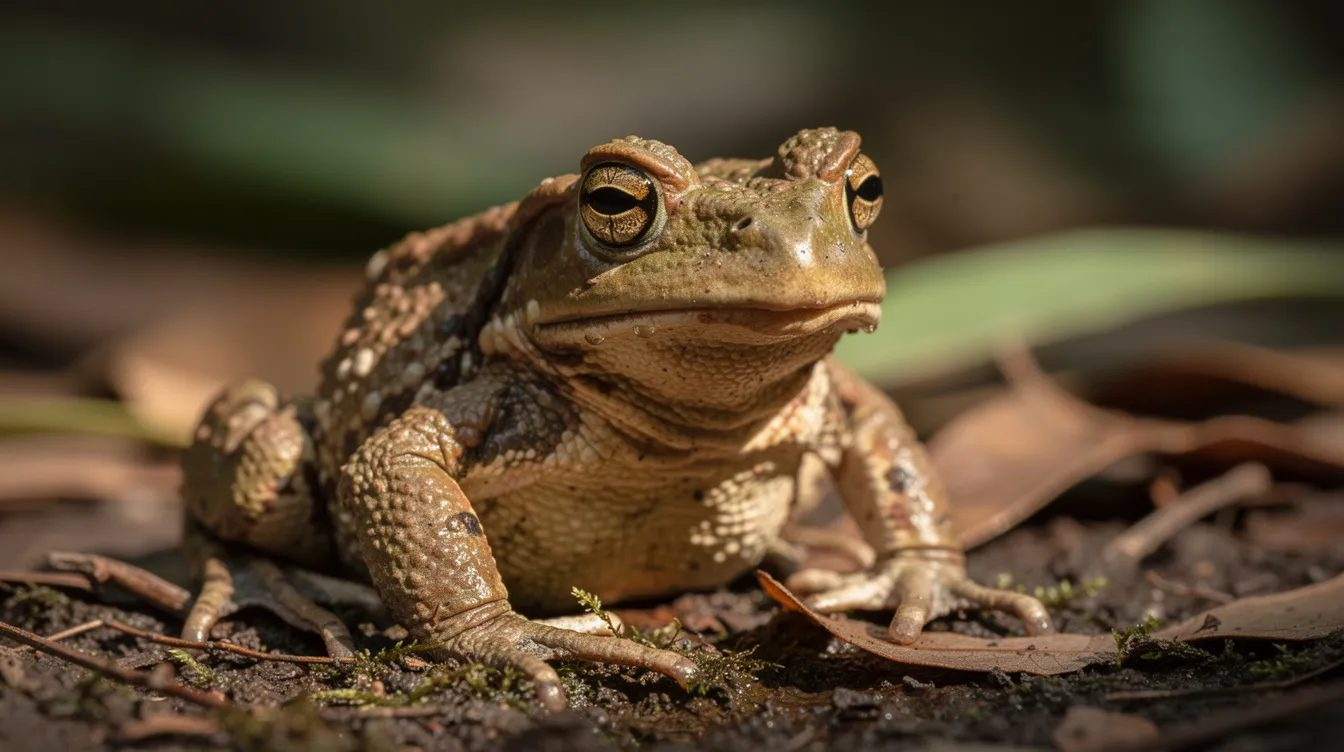
- Identify adult cane toads by size, color, dry skin, and large triangular parotoid glands behind their eyes.
- Perform first aid safely before further treatment is available.
- Understand what veterinary care may include, such as oxygen, cardiac monitoring, anticonvulsants, and IV fluids.
- Prevent future exposure by changing yard conditions that attract cane toads.
Understanding Bufo Toad Toxicity
Understanding bufo toad biology helps pet owners act faster and prevent exposure. The “bufo toad” most Central Florida owners worry about is the cane toad, also called the marine toad, giant toad, or Bufo marinus historically; the current scientific name is Rhinella marina. The cane toad (Rhinella marina) is a highly invasive species, and cane toads secrete bufotoxin, which is highly toxic.

Identifying Bufo Toads in Central Florida
Understanding the bufo toad’s behavior can help prevent encounters.
Cane toads can grow up to 9 inches long. Cane toads range from 6 to 9 inches long, and cane toads can grow from 6 to 9 inches long, making adult cane toads much larger than most toads commonly found around homes. Their coloration may be grayish brown, reddish brown, tan, or olive, and their dry skin is warty and thick.
Cane toads have large, triangular parotoid glands behind their eyes. These glands behind the eyes are the major toxin-storage structures, and their size helps distinguish cane toads from many native frogs and native southern toads. Cane toads lack ridges on their heads unlike southern toads, while native southern toads and other native true toads usually have different head ridge patterns and smaller, differently shaped glands.
Pet owners should be aware of the bufo toad’s habitat to avoid dangerous situations.
The bufo toad’s large size makes it easily recognizable to pet owners.
Identifying bufo toads is key to preventing pet poisoning.
The bufo toad’s toxin can be fatal within minutes, making rapid identification crucial.
Understanding how bufo toad toxins work can save your pet’s life.
Bufo toads can cause severe reactions in pets, leading to an emergency situation.
Recognizing the signs of bufo toad poisoning quickly is vital.
Cane toad, also known as bufo toad, is a critical concern for pet owners.
Understanding bufo toad risks helps in protecting your pets effectively.
Every pet owner should be informed about bufo toads and their dangers.
Bufo toads are often found in areas where pets play, raising exposure risk.
Being aware of bufo toads helps in making informed decisions regarding pet safety.
Immediate recognition of bufo toads is critical for protecting pets.
Understanding the bufo toad’s habits can help mitigate risks in your yard.
Pet owners should learn how to safely handle a bufo toad encounter.
In the Bushnell area, cane toads are commonly found in urban and agricultural areas, including yards, gardens, ditches, canals, golf courses, barns, and areas with outdoor lights. Heavy rain, standing water, pet food, and insects can attract cane toads. Cane toads breed year-round in standing water and canals, and cane toads lay up to tens of thousands of eggs at a time. Cane toad eggs and tadpoles are also toxic, so water features and drainage areas deserve attention.
Identification matters because most toads are irritating to pets, but cane toad toxicity is different in speed and severity. The next step is understanding how the toad toxin enters the body and why a dog or cat can deteriorate within minutes.
How Bufotoxin Affects Pet Physiology
Bufotoxin is a mixture of toxic substances found in skin gland secretions and parotoid gland secretions. When a pet bites, mouths, or harasses a toad, toxins secreted from the glands coat the pet’s mouth, lips, tongue, gums, and sometimes the eyes or nose. Handling cane toads can cause skin irritation in humans, which is why gloves or tools are recommended if a person must move a suspected cane toad safely.
The toxin is rapidly absorbed through mucous membranes. Poison absorbed through the mouth can reach the bloodstream very quickly because the gums, tongue, and inner cheeks are highly vascular. Toxin absorbed through eyes, nose, or open wounds can also cause problems, although mouth exposure is the most common route when a dog licks or pet bites a toad.
The Merck Veterinary Manual describes toad poisoning as a fast-acting intoxication that can affect the nervous system and heart. Cornell veterinary poisoning guidance likewise emphasizes that suspected toxin exposure requires immediate veterinary advice and urgent professional assessment, especially when neurological or cardiac signs appear. In cane toad poisoning, bufotoxin can trigger profuse salivation, vomiting or retching, muscle tremors, seizures, abnormal heart rhythms, and collapse.
How severe a case becomes can vary depending on how much toxin contacts the pet, how long the toxin stays in the mouth, the pet’s size, and how quickly first aid begins. A small terrier breed that bites down on an adult cane toad may receive a higher dose per pound than a large dog with brief contact.
Why Central Florida Pets Are Particularly Vulnerable
Florida’s warm climate allows invasive cane toads to stay active through much of the year, especially in tropical areas and during warm, wet months. In Central Florida, heavy rain creates moist shelter and breeding sites, while canals, ponds, puddles, irrigation runoff, and livestock water areas support reproduction. This is one reason pet owners in Bushnell may encounter cane toads on private property year round.
Suburban and agricultural landscapes also create ideal contact zones. Outdoor lights attract insects; insects attract cane toads; and pet food or water bowls left outside can bring outdoor pet food odors into the same spaces where pets roam. Cane toads are commonly found in urban and agricultural areas because these settings offer shelter, food, and water close to homes.
Knowing what to do when encountering a bufo toad can save a pet’s life.
Dogs are more likely to be poisoned than cats because dogs investigate with their mouths, chase moving animals, and may clamp down before an owner can intervene. Cats are still at risk, especially if a cat mouths a toad or gets toxin on the tongue or gums. Because Florida mosquitoes are active much of the year, dogs in this region also benefit from consistent heartworm prevention for dogs. Certain species outside Florida, such as the Sonoran Desert toad, can also cause severe toad poisoning, but the cane toad is the primary Central Florida concern.
Cane toads are not only a pet health issue; they are also a wildlife ecology issue. Cane toads disrupt food webs by reducing predator populations, few native animals have evolved to handle the poison of cane toads, and cane toads can poison larger predators that attempt to eat them. Toxicity of cane toads threatens local biodiversity, cane toads compete for resources with native frogs and small animals, and cane toads alter essential processes such as soil aeration and seed dispersal.
Recognizing Emergency Symptoms in Poisoned Pets
Because cane toad toxin is rapidly absorbed, clinical signs may appear within minutes. Dr. Roger Hart’s practical message for local pet owners is simple: treat a suspected exposure as an emergency even before severe symptoms appear. Waiting for seizures, collapse, or cardiac arrest can remove the best window for life-saving care.

Early Warning Signs (First 5-15 Minutes)
The earliest signs of cane toad poisoning usually involve the mouth. Symptoms of cane toad toxicity include drooling and seizures, but drooling often comes first. Watch for excessive drooling, profuse salivation, foamy saliva, pawing at the mouth, rubbing the face on the ground, head shaking, gagging, or retching.
The gums may look bright red, inflamed, or irritated. If you can safely look inside the pet’s mouth, check the tongue, gumline, and inner cheeks. Do not put your fingers near the mouth if the pet is seizing, panicked, or likely to bite.
Early signs can escalate quickly. Cane toad toxin can kill pets within 15 minutes, and symptoms of cane toad poisoning include seizures and disorientation. A pet that seems “only drooly” after a toad encounter may still need urgent veterinary help.
Severe Neurological Symptoms
Veterinary care for bufo toad exposure is critical for pet recovery.
Bufo toad treatment involves emergency response and veterinary intervention.
Understanding bufo toad emergency signs can help in acting quickly.
Awareness of bufo toad behavior is essential for preventing poisoning.
Neurological signs occur when the toxin affects nerve function and brain activity. Muscle tremors may begin as twitching around the face or limbs and progress into full-body shaking. Severe exposure can cause seizures, collapse, abnormal posture, or loss of awareness.
Symptoms of cane toad poisoning include seizures and disorientation. Disorientation may look like staring, stumbling, walking in circles, failing to respond to the owner, or appearing suddenly blind or confused. Loss of coordination, weakness, and abnormal eye movements called nystagmus are also possible.
These signs mean the pet needs immediate veterinary care, not home monitoring. Anticonvulsant medication, temperature control, oxygen, and further treatment may be needed to prevent brain injury, respiratory failure, or worsening heart problems.
Critical Cardiac and Respiratory Signs
Cane toad toxin can affect the heart in a way similar to digitalis-like compounds, causing dangerous rhythm disturbances. A pet may develop a very fast pulse, very slow pulse, irregular heartbeat, weakness, collapse, or sudden cardiac arrest. These changes are not reliably detectable at home without veterinary monitoring.
Respiratory signs are equally urgent. Difficulty breathing, open-mouth breathing, blue or gray gums, severe panting, or gasping can indicate oxygen deprivation, cardiac compromise, or respiratory muscle involvement. A pet with difficulty breathing should be transported immediately while a second person calls the clinic if possible.
If a pet collapses, has seizures, or shows breathing distress after contact with a cane toad, seek veterinary help immediately. The goal is to remove toxin from the mouth fast, then reach professional care before toxin absorbed into the bloodstream causes irreversible damage.
Emergency Treatment and Professional Veterinary Care
Emergency treatment starts at the site of exposure, but professional veterinary care is often what determines survival in moderate to severe cases. Bushnell Animal Clinic and Dr. Roger Hart can help pet owners decide whether immediate clinic evaluation, emergency referral, or continued home flushing during transport is safest. The Merck Veterinary Manual notes that treatment for toad poisoning is mainly decontamination and supportive care because there is usually no specific antidote.

Immediate First Aid Protocol
Use first aid when you witness a pet mouth a toad or when early signs appear immediately after outdoor exposure. Do not delay transport for prolonged home care if the pet is weak, seizing, unconscious, or struggling to breathe.
- Remove pet from toad and assess consciousness level. Move the dog or cat away from the toad, avoid being bitten, and prevent additional licking or chewing.
- Flush mouth with water using proper technique. Hold the pet’s head slightly downward so water drains out of the mouth rather than toward the throat. Gently rinse the gums, tongue, and inner cheeks.
- Wipe gums. Use a wet cloth to wipe gums, lips, and inner cheeks; continue wiping with clean sections of cloth to remove sticky toxin.
- Contact Bushnell Animal Clinic emergency line immediately. If Bushnell Animal Clinic is closed, call an emergency hospital, poison control service, or the nearest veterinarian for veterinary advice.
- Transport safely while continuing mouth flushing if possible. If another person can drive, continue gentle decontamination only if the pet can breathe normally and is not at risk of aspiration.
Do not induce vomiting unless a veterinarian specifically instructs you to do so. In many cane toad poisoning cases, the danger is toxin on mucous membranes rather than swallowed material, and vomiting can increase aspiration risk.
Professional Emergency Treatment Comparison
Symptom Severity | First Aid | Veterinary Treatment | Prognosis |
|---|---|---|---|
Mild exposure | Immediate mouth rinse, wipe gums, call for veterinary advice | Oral decontamination, exam, temperature and heart check, observation | Often good if treated within minutes; some pets improve within a few hours |
Moderate poisoning | Mouth flushing during transport if safe; seek veterinary care urgently | IV fluids, anti-nausea care, oxygen as needed, ECG monitoring, medications for tremors or abnormal rhythm | Guarded to good with rapid care; hospitalization may be needed |
Severe toxicity | Remove toxin if possible, transport immediately, do not wait at home | Oxygen, IV fluids, anticonvulsants, antiarrhythmics, electrolyte monitoring, possible intensive care | High risk; cane toad poisoning can lead to death within 15 minutes without immediate intervention |
Veterinary treatment may include repeated mouth decontamination, oxygen therapy, ECG monitoring, seizure control, medications for abnormal heart rhythms, and IV fluids to support circulation. There is no specific antidote routinely available for cane toad toxin, so early removal of toxin and rapid supportive care are critical. |
The level of care depends on clinical signs, body size, exposure amount, and how much toxin was removed before arrival. Mild cases may be monitored and discharged, while severe cases may need aggressive stabilization and referral-level care, similar to what is provided during a sick patient exam for pets.
Be proactive against bufo toad exposure by preparing your pet for outdoor activities.
Common Challenges and Solutions
Dr. Roger Hart and Central Florida veterinary teams often see the same preventable problems: owners wait too long, dogs chase toads again after recovery, or families cannot tell invasive cane toads from native species. These challenges are solvable with a practical plan and access to compassionate veterinary care services in Bushnell, Florida.
Pet Won’t Stop Chasing Toads After Recovery
Some dogs become repeat offenders because chasing frogs and toads is rewarding behavior. Terrier breeds, sporting breeds, and young dogs may be especially persistent because movement triggers prey drive.
Use a leash for nighttime and post-rain potty breaks, teach a reliable “leave it” cue, and reward the dog for turning away from wildlife. Do not allow unsupervised yard access after heavy rain or near standing water. If a dog has already had cane toad poisoning, assume future encounters are likely unless the environment and behavior both change, and discuss a broader wellness and preventive care plan with your veterinary team.
Environmental management helps too. Remove debris, reduce hiding places, bring outdoor pet food and water bowls inside at night, and limit bright exterior lighting that attracts insects. Fewer insects can mean fewer cane toads.
For pet safety, understanding bufo toad encounters is crucial for pet owners.
Difficulty Distinguishing Bufo from Native Toads
Many pet owners hesitate because they do not know whether the animal is a cane toad, southern toad, or another native species. When in doubt, treat the exposure as dangerous and seek veterinary advice.
Key cane toad markers include large body size, dry warty skin, grayish brown or reddish brown coloring, and large triangular parotoid glands behind the eyes. Cane toads can grow from 6 to 9 inches long, while native southern toads are usually smaller. Cane toads lack ridges on their heads unlike southern toads, and gland shape is one of the fastest field clues.
If safe, take a photo from a distance to show the veterinary team. Do not handle the animal barehanded. Captured cane toads should not be relocated, and pet owners should follow Florida rules for humane handling.
Managing Repeat Exposure in High-Risk Areas
High-risk properties often have standing water, canals, irrigation runoff, dense ground cover, outdoor feeding areas, or lights that attract insects. Cane toads breed year-round in standing water and canals, so prevention requires more than removing one adult toad.
Homeowners can hire wildlife trappers for cane toad removal, especially when repeated sightings occur near patios, kennels, barns, ponds, or children’s play areas. Cane toads can be humanely euthanized on private property, and benzocaine or lidocaine can be used for humane euthanasia when done according to accepted wildlife guidance. Cane toads cannot be relocated after capture in Florida, so it is essential to know where your closest veterinary clinic in Sumter County is located in case of an emergency.
For long-term reduction, remove cane toads by making the property less attractive: drain unnecessary standing water, cover pools and water features when practical, keep grass trimmed, clear clutter, and bring outdoor pet food indoors. Seasonal awareness is essential because warm wet nights produce the highest encounter risk.
Prevention Strategies and Next Steps
The best outcome is preventing contact before toxin reaches the pet’s mouth. Emergency preparedness and property management work together: know what to do in the first five minutes, and reduce the chance that a dog or cat meets a cane toad in the first place.

- Save emergency contacts now. Store Bushnell Animal Clinic, your trusted Bushnell vet clinic, Dr. Roger Hart, the nearest veterinarian, and the closest 24-hour emergency hospital in your phone.
- Walk the yard before letting pets out at night. Use a flashlight after heavy rain and check patios, water bowls, doorways, and fence lines.
- Bring outdoor pet food and water bowls inside. Pet food, insects, moisture, and shelter can attract cane toads.
- Reduce breeding and hiding sites. Remove standing water, leaf piles, boards, dense debris, and clutter around sheds or gardens.
- Train and supervise pets. Use leash walks after rain, teach “leave it,” and keep known repeat offenders away from ponds, ditches, and canals.
- Plan humane removal. Captured cane toads cannot be relocated after capture in Florida, but homeowners can hire wildlife trappers for cane toad removal.
Pet owners should also learn about other Florida wildlife dangers, including venomous snakes, toxic plants, heat injury, and other frogs or true toads that may irritate the mouth, as well as internal issues such as allergies in dogs, their symptoms, and treatment options. Resources from the Florida Institute of Food and Agricultural Sciences, including wildlife ecology education associated with experts such as Steve Johnson, can help homeowners understand invasive species risks and protect native frogs, small mammals, and local biodiversity.
Frequently Asked Questions
What are the first signs of bufo or cane toad poisoning in pets?
The first signs are usually excessive drooling, profuse salivation, foaming at the mouth, head shaking, pawing at the mouth, red gums, gagging, or sudden agitation. Symptoms of cane toad toxicity include drooling and seizures, and symptoms of cane toad poisoning include seizures and disorientation.
How fast can cane toad toxin kill a pet?
Cane toad toxin can kill pets within 15 minutes. Cane toad poisoning can lead to death within 15 minutes, especially when a dog receives a large dose and the toxin is not flushed from the mouth quickly.
Are dogs more at risk than cats?
Dogs are more likely to be poisoned than cats because dogs commonly investigate wildlife with the mouth. Cats can still develop toad poisoning if toxin contacts the tongue, gums, eyes, nose, or open wounds.
What should I do immediately if my dog licks or bites a cane toad?
Remove the pet from the toad, flush the pet’s mouth with water while pointing the head downward, wipe gums and inner cheeks with a wet cloth, and seek veterinary care immediately. Immediate mouth flushing can save a poisoned pet’s life.
Is there a specific antidote for cane toad poisoning?
There is no specific antidote routinely used for cane toad poisoning. Veterinary care focuses on removing toxin, controlling seizures, treating abnormal heart rhythms, supporting breathing, correcting electrolyte problems, and giving IV fluids when needed.
How can I identify a cane toad?
Cane toads have large, triangular parotoid glands behind their eyes, dry warty skin, and grayish brown to reddish brown coloring. Cane toads can grow up to 9 inches long, cane toads range from 6 to 9 inches long, and cane toads can grow from 6 to 9 inches long.
Are cane toad eggs dangerous?
Yes. Cane toad eggs and tadpoles are also toxic. Cane toads lay up to tens of thousands of eggs at a time, so standing water, canals, and ponds can become long-term exposure sites.
Can I relocate captured cane toads?
No. Cane toads cannot be relocated after capture in Florida. Cane toads can be humanely euthanized on private property, benzocaine or lidocaine can be used for humane euthanasia, and homeowners can hire wildlife trappers for cane toad removal.
How much does treatment cost?
Cost can vary depending on severity, timing, and whether further treatment such as hospitalization, ECG monitoring, oxygen, anti-seizure medication, antiarrhythmics, or IV fluids is needed. Call Bushnell Animal Clinic, Dr. Roger Hart’s team, or the nearest emergency hospital for a current estimate.
When should I contact Dr. Roger Hart or Bushnell Animal Clinic?
Contact Dr. Roger Hart or Bushnell Animal Clinic immediately after any suspected cane toad exposure, even if signs seem mild. If the clinic is closed or your pet is seizing, collapsed, or having difficulty breathing, seek veterinary help from the nearest veterinarian or emergency hospital without delay.

Leave a Reply